In the dynamic landscape of the automotive industry, constant innovation and the pursuit of efficiency and sustainability drive manufacturers to explore new materials and technologies. One such material that has been gaining significant attention is aluminum. As a leading supplier of aluminum platforms, I am excited to delve into the question: Can aluminum platforms be used in the automotive industry?
Advantages of Aluminum in the Automotive Industry
Aluminum has several inherent properties that make it an attractive material for use in the automotive sector. Firstly, its lightweight nature is a game - changer. Compared to traditional steel, aluminum is approximately one - third the weight. This reduction in weight can significantly improve fuel efficiency, as less energy is required to move the vehicle. With the growing emphasis on environmental regulations and the push towards more sustainable transportation, the ability to reduce a vehicle's carbon footprint through weight reduction is a major advantage.
Secondly, aluminum offers excellent corrosion resistance. In automotive applications, exposure to various environmental elements such as moisture, road salt, and chemicals can cause corrosion in metal components. Aluminum forms a thin oxide layer on its surface, which acts as a protective barrier against corrosion. This means that automotive parts made from aluminum are likely to have a longer lifespan and require less maintenance over time.
Another important property of aluminum is its high strength - to - weight ratio. Despite being lightweight, aluminum can be engineered to have sufficient strength to withstand the rigors of automotive use. This allows for the design of components that are both strong and lightweight, contributing to overall vehicle performance.

Aluminum Platforms in Automotive Manufacturing
Aluminum platforms can be used in a variety of ways in the automotive industry. One of the most common applications is in the construction of vehicle frames. By using aluminum platforms, manufacturers can create lighter frames without sacrificing strength. This not only improves fuel efficiency but also enhances the vehicle's handling and performance.
In addition to frames, aluminum platforms can be used for interior components. For example, they can be used to create lightweight and durable seating structures. The use of aluminum in these applications can reduce the overall weight of the vehicle's interior, further contributing to fuel savings.
Aluminum platforms can also play a role in the development of electric vehicles (EVs). As the demand for EVs continues to grow, the need for lightweight materials becomes even more critical. Aluminum platforms can help reduce the weight of EVs, which in turn can increase their range and improve battery efficiency.
Specific Aluminum Platform Products for the Automotive Industry
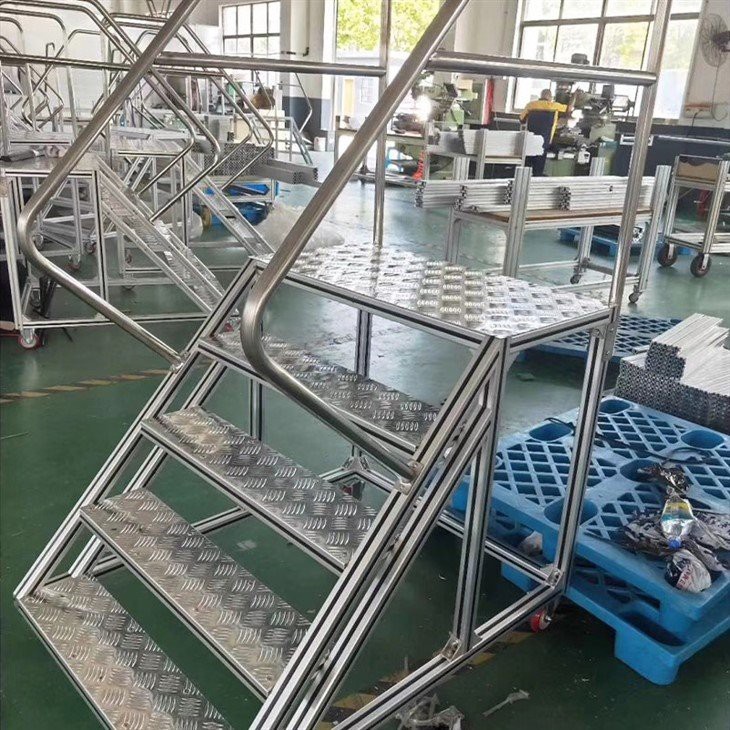
As a supplier of aluminum platforms, we offer a range of products that are suitable for automotive applications. Our Immovable Aluminum Profile Stairs can be used in specialized automotive settings, such as in maintenance and inspection areas. These stairs are made from high - quality aluminum profiles, ensuring durability and stability.
Our RV 3 Step Stairs are also relevant to the automotive industry, especially in the context of recreational vehicles. These stairs are lightweight yet strong, making them ideal for use in RVs where weight is a crucial factor.
Our Aluminium Work Platform can be used in automotive manufacturing plants for various tasks, such as assembly and maintenance. These platforms provide a stable and safe working surface, and their aluminum construction ensures long - term durability.
Challenges and Considerations
While aluminum platforms offer many advantages for the automotive industry, there are also some challenges and considerations. One of the main challenges is the cost. Aluminum is generally more expensive than steel, which can increase the overall cost of vehicle production. However, as the demand for aluminum in the automotive industry grows, economies of scale may help to reduce the cost over time.
Another consideration is the manufacturing process. Working with aluminum requires specialized equipment and expertise. Automotive manufacturers need to invest in the necessary technology and training to ensure that they can effectively use aluminum platforms in their production processes.
Future Outlook
The future of aluminum platforms in the automotive industry looks promising. As the automotive industry continues to evolve towards more sustainable and efficient vehicles, the demand for lightweight materials like aluminum is likely to increase. With ongoing research and development, we can expect to see even more innovative uses of aluminum platforms in the automotive sector.
In addition, as the technology for working with aluminum improves, the cost of using aluminum platforms is likely to become more competitive. This will make it more accessible for automotive manufacturers to incorporate aluminum platforms into their vehicles.
Conclusion
In conclusion, aluminum platforms have significant potential for use in the automotive industry. Their lightweight, corrosion - resistant, and high - strength properties make them an attractive option for a variety of automotive applications. While there are challenges to overcome, such as cost and manufacturing complexity, the benefits of using aluminum platforms far outweigh the drawbacks.
If you are an automotive manufacturer or are involved in the automotive supply chain and are interested in exploring the use of aluminum platforms in your operations, we would be delighted to discuss your specific needs. Our team of experts can provide you with detailed information about our products and how they can be customized to meet your requirements. Contact us to start a conversation about how our aluminum platforms can enhance your automotive projects.
References
- ASM International. "Aluminum and Aluminum Alloys." ASM Handbook, Vol. 2.
- SAE International. "Lightweight Materials in Automotive Applications." SAE Technical Papers.
- International Aluminium Institute. "Aluminium in the Automotive Industry: Driving Sustainability."