

Can aluminum platforms support heavy equipment? That's a question I get asked a lot as a supplier of Aluminum Platforms. In this blog, I'm gonna break down the science behind it, share some real - world examples, and give you the lowdown on whether our aluminum platforms can handle the weight.
Understanding Aluminum's Strength
First off, let's talk about aluminum as a material. Aluminum has come a long way in the engineering world. It's lightweight, which is a huge plus when you're looking to move or install platforms. But the big question is, can it support heavy equipment? Well, the answer lies in its alloy composition and how it's designed.

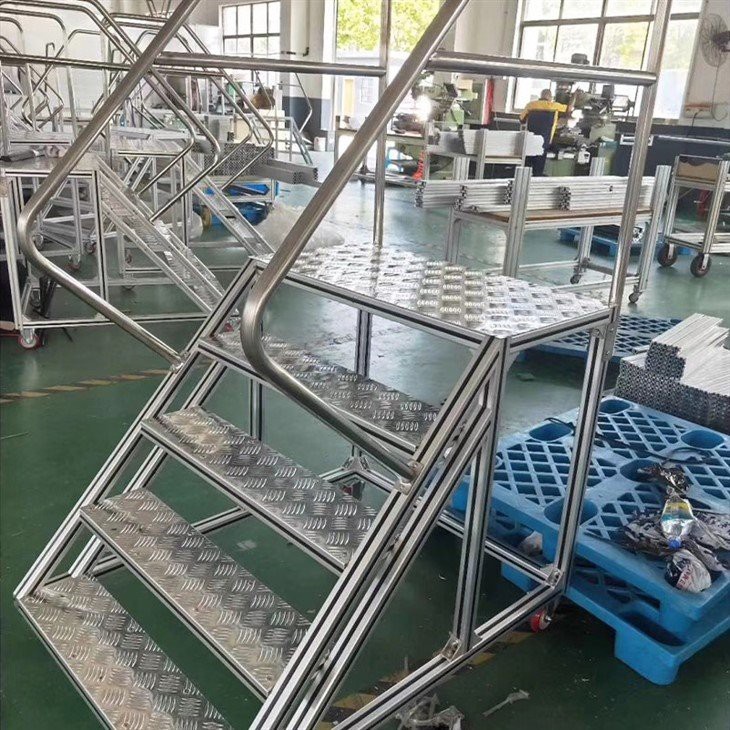
Aluminum alloys are engineered to have different properties. Some are super - strong and can withstand a significant amount of stress. When we're making our aluminum platforms, we use high - quality alloys that are specifically chosen for their strength - to - weight ratio. This means that even though aluminum is light, it can still pack a punch when it comes to supporting heavy loads.
Design Matters
The design of an aluminum platform is crucial. We don't just slap some aluminum pieces together and call it a day. Our engineers spend a lot of time on the design, taking into account factors like the distribution of weight. When heavy equipment is placed on a platform, the weight needs to be evenly spread out. That's why our platforms are designed with a grid - like structure or reinforced beams in strategic places.
For example, our Aluminium Work Platform is designed with a robust framework that distributes the load across the entire surface. This design ensures that no single point on the platform bears too much weight, reducing the risk of bending or breaking.
Real - World Testing
We don't just rely on theory. We put our aluminum platforms through rigorous testing. We simulate the weight of different types of heavy equipment, from small machinery to large industrial tools. In these tests, we measure how the platform responds to the load. We check for any signs of deformation, like bending or cracking.
In one of our tests, we placed a piece of heavy construction equipment on an RV 3 Step Stairs. The stairs held up perfectly, with no visible signs of stress. This shows that our platforms are not only designed well but also built to last.
Load - Bearing Capacity
Each of our aluminum platforms has a specific load - bearing capacity. This is the maximum amount of weight the platform can safely support. We calculate this capacity based on the material strength, design, and the intended use of the platform.
For instance, our Immovable Aluminum Profile Stairs are designed to support a certain amount of weight per step. This information is clearly marked on the product, so you know exactly what you're getting. It's important to always check the load - bearing capacity before placing heavy equipment on any platform.
Advantages of Aluminum Platforms for Heavy Equipment
There are several advantages to using aluminum platforms for heavy equipment. One of the biggest is the ease of installation. Since aluminum is lightweight, it's much easier to move and set up compared to other materials like steel. This can save you a lot of time and money on installation costs.
Another advantage is corrosion resistance. Aluminum naturally forms a protective oxide layer on its surface, which makes it resistant to rust and corrosion. This is especially important if your heavy equipment is used in outdoor or humid environments. You don't have to worry about the platform deteriorating over time due to exposure to the elements.
Limitations
Of course, aluminum platforms aren't without their limitations. While they can support a significant amount of weight, there are still upper limits. If you have extremely heavy equipment that exceeds the load - bearing capacity of our platforms, then you might need to consider other options.
Also, in some high - temperature environments, the strength of aluminum can be affected. At very high temperatures, aluminum can become softer and lose some of its load - bearing capacity. So, it's important to consider the operating environment when choosing an aluminum platform.
Making the Right Choice
When it comes to choosing an aluminum platform for your heavy equipment, there are a few things to keep in mind. First, determine the weight of the equipment you'll be placing on the platform. Then, check the load - bearing capacity of our different platforms to find one that can handle the weight.
Consider the environment where the platform will be used. If it's outdoors or in a corrosive environment, our corrosion - resistant platforms are a great choice. And think about the installation process. Our lightweight platforms can make installation a breeze.
Contact Us for More Information
If you're still not sure if our aluminum platforms are right for your heavy equipment, don't hesitate to reach out. We have a team of experts who can answer all your questions and help you choose the best platform for your needs. Whether you're in the construction industry, RVing, or any other field that requires heavy equipment support, we've got you covered.
Let's start a conversation about how our aluminum platforms can meet your requirements. We're looking forward to working with you to find the perfect solution for your heavy equipment support needs.
References
- "Aluminum Alloys: Properties and Applications" - A technical guide on aluminum alloys and their uses.
- Engineering studies on load - bearing capacity of aluminum structures.
- In - house testing reports from our aluminum platform production.


