

Heavy duty aluminum platforms are renowned for their strength, durability, and versatility, making them a popular choice across various industries. But a question that often arises is whether these platforms can be used in cleanrooms. Cleanrooms are highly controlled environments where the concentration of airborne particles is regulated to meet specific standards, typically used in industries such as semiconductor manufacturing, pharmaceuticals, and biotechnology. In this blog, as a heavy duty aluminum platforms supplier, I will explore the feasibility of using heavy duty aluminum platforms in cleanrooms and discuss the key considerations.
Characteristics of Heavy Duty Aluminum Platforms
Heavy duty aluminum platforms are constructed from high - grade aluminum alloys. Aluminum is known for its excellent strength - to - weight ratio, which means these platforms can support significant loads while remaining relatively lightweight. This makes them easy to install, relocate, and adjust as needed.
Aluminum is also corrosion - resistant, which is a crucial property in many industrial settings. It can withstand exposure to moisture, chemicals, and various environmental conditions without rusting or degrading. This corrosion resistance reduces the need for frequent maintenance and extends the lifespan of the platforms.
Moreover, heavy duty aluminum platforms can be customized to meet specific requirements. They can be designed with different sizes, shapes, and configurations to fit the layout and needs of different workspaces. For example, some platforms can be equipped with handrails, guardrails, and access stairs for enhanced safety.
Requirements of Cleanrooms
Cleanrooms have strict requirements regarding particle generation, cleanliness, and contamination control. The air in a cleanroom is filtered to remove dust, microorganisms, and other particles. The level of cleanliness is classified according to the number of particles per cubic meter of air at a specified particle size. For instance, a Class 1 cleanroom has the strictest requirements, allowing only a very small number of particles of a certain size.
In addition to air quality, cleanrooms also require surfaces that are easy to clean and disinfect. Surfaces should be smooth, non - porous, and resistant to chemicals to prevent the accumulation of contaminants. Any equipment or materials used in a cleanroom must not shed particles or release volatile organic compounds (VOCs) that could contaminate the environment.
Can Heavy Duty Aluminum Platforms Meet Cleanroom Requirements?
Particle Generation
One of the main concerns when using heavy duty aluminum platforms in cleanrooms is particle generation. Aluminum is a relatively hard and smooth material. When properly manufactured and finished, it does not generate a significant amount of particles during normal use. However, if the platforms are subject to abrasion, impact, or improper handling, they may produce small particles.
To minimize particle generation, the manufacturing process of the aluminum platforms should be carefully controlled. High - precision machining and finishing techniques can be used to ensure smooth surfaces. Additionally, proper cleaning and maintenance procedures should be established to remove any loose particles that may accumulate on the platforms over time.
Cleanability
Heavy duty aluminum platforms can be designed to be easily cleaned. Aluminum surfaces can be wiped down with common cleaning agents without being damaged. The smooth and non - porous nature of aluminum makes it resistant to the adhesion of contaminants, allowing for effective cleaning.
However, it is important to note that the design of the platform can affect its cleanability. Platforms with complex geometries or hard - to - reach areas may be more difficult to clean thoroughly. Therefore, when designing heavy duty aluminum platforms for cleanroom use, simple and accessible designs should be preferred.
Compatibility with Cleanroom Environment
Aluminum is generally compatible with the cleanroom environment. It does not release harmful chemicals or VOCs, which is an important requirement in cleanrooms. Additionally, the corrosion - resistant property of aluminum ensures that it can withstand the cleaning and disinfection processes typically used in cleanrooms without degrading.
Case Studies and Applications
In some semiconductor manufacturing facilities, heavy duty aluminum platforms have been successfully used in cleanrooms. These platforms are used for equipment access, maintenance, and material handling. For example, Immovable Aluminum Profile Stairs can be installed in cleanrooms to provide safe access to elevated equipment. The smooth and cleanable surfaces of these stairs meet the cleanliness requirements of the cleanroom, and their heavy - duty construction can support the weight of workers and equipment.
In the pharmaceutical industry, RV 3 Step Stairs made of aluminum are used for accessing different levels in cleanrooms. These stairs are designed to be easy to clean and disinfect, ensuring that they do not contribute to the contamination of the cleanroom environment.
Considerations for Using Heavy Duty Aluminum Platforms in Cleanrooms
Surface Treatment
Applying a proper surface treatment to the aluminum platforms can enhance their performance in cleanrooms. For example, anodizing can increase the hardness and corrosion resistance of the aluminum surface, reducing the risk of particle generation. Anodized aluminum also has a smooth and uniform finish, which is easier to clean.
Installation and Maintenance
Proper installation is crucial to ensure the performance of heavy duty aluminum platforms in cleanrooms. The platforms should be installed in a clean environment to prevent the introduction of contaminants. Regular maintenance, including cleaning and inspection, should be carried out to ensure that the platforms remain in good condition and do not generate particles.
Regulatory Compliance
When using heavy duty aluminum platforms in cleanrooms, it is important to ensure compliance with relevant industry standards and regulations. For example, in the pharmaceutical industry, platforms must meet the requirements of Good Manufacturing Practice (GMP).
Conclusion
Heavy duty aluminum platforms can be used in cleanrooms, provided that certain conditions are met. Their strength, durability, and cleanability make them a viable option for cleanroom applications. However, careful consideration should be given to particle generation, cleanability, and compatibility with the cleanroom environment.

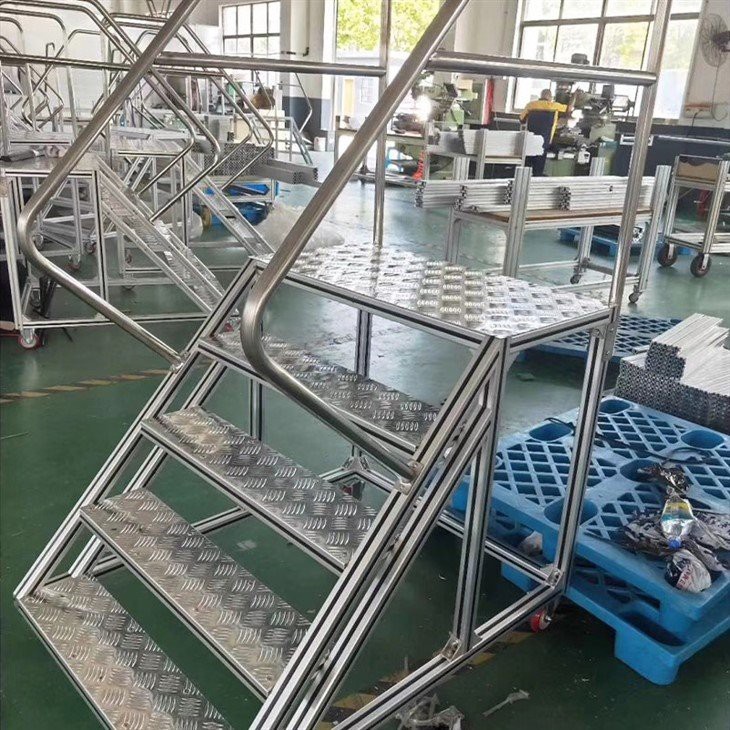
As a heavy duty aluminum platforms supplier, we offer a wide range of products, including Aluminium Work Platform, that can be customized to meet the specific requirements of cleanrooms. Our platforms are designed with high - quality materials and advanced manufacturing techniques to ensure low particle generation and easy cleanability.
If you are considering using heavy duty aluminum platforms in your cleanroom, we invite you to contact us for more information. Our team of experts can provide you with detailed product information, technical support, and help you make the right choice for your cleanroom application.
References
- ISO 14644 - 1:2015, Cleanrooms and associated controlled environments — Part 1: Classification of air cleanliness.
- Good Manufacturing Practice (GMP) guidelines for pharmaceutical manufacturing.
- Technical literature on aluminum alloys and their properties.


