Hey there! I'm a supplier of Aluminum Rolling Stairs, and today I wanna chat about how to transport these nifty pieces of equipment.
First off, let's talk about why transporting aluminum rolling stairs is a bit of a unique challenge. Aluminum rolling stairs are pretty handy. They're lightweight compared to some other types of stairs, thanks to the aluminum material. This makes them easy to move around on - site, but when it comes to long - distance transport, there are still some things to keep in mind.
One of the great things about aluminum rolling stairs is their portability. They're designed to be moved from one place to another, whether it's within a warehouse or to a different job site. But when you're planning to transport them, you need to think about their size, weight, and the condition you want them to arrive in.
Size is a crucial factor. Aluminum rolling stairs can vary in length and width. Some are small and compact, perfect for tight spaces, while others are larger and more robust. Before you start the transport process, measure your stairs accurately. This will help you choose the right vehicle for transportation. If you've got a small set of stairs, you might be able to fit them in the back of a pickup truck. But for larger ones, you'll probably need a flatbed trailer or a box truck.
Weight is another important consideration. Even though aluminum is lightweight, a big set of rolling stairs can still be heavy. You need to make sure that the vehicle you choose can handle the weight. Overloading a vehicle can be dangerous and can also cause damage to the stairs during transport. Check the vehicle's weight capacity and compare it to the weight of your stairs. You can usually find the weight of your aluminum rolling stairs in the product specifications.

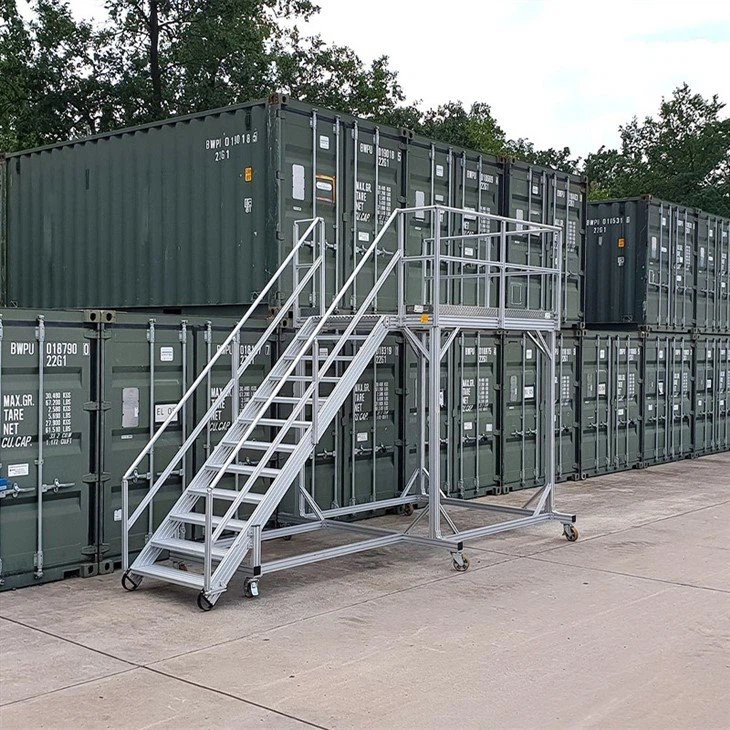
Now, let's get into the actual steps of transporting aluminum rolling stairs.
Step 1: Preparation
Before you load the stairs onto the vehicle, you need to prepare them properly. First, clean the stairs. Remove any dirt, debris, or tools that might be on them. This not only keeps the vehicle clean but also ensures that nothing gets lost or damaged during transport.
Next, check for any loose parts. Tighten all the bolts and screws to make sure the stairs are in good condition. If there are any parts that are damaged or loose, fix them before you start transporting. You don't want a part to fall off during the journey.
Step 2: Loading
Loading the stairs onto the vehicle needs to be done carefully. If you're using a pickup truck, you might need a couple of people to lift the stairs into the bed. Make sure to lift with your legs and not your back to avoid injury.
If you're using a flatbed trailer, you can use a forklift to load the stairs. This is a safer and more efficient way, especially for larger stairs. When loading, place the stairs in a stable position. You don't want them to shift during transport. Secure the stairs with straps or ropes. Make sure the straps are tight enough to hold the stairs in place but not so tight that they damage the aluminum.
Step 3: Securing
Once the stairs are loaded, securing them properly is crucial. As I mentioned earlier, use strong straps or ropes. You can also use bungee cords for smaller parts. Attach the straps to the vehicle's tie - down points. Make sure the stairs are centered on the vehicle to distribute the weight evenly.
Check the straps regularly during the journey. Vibrations and bumps can cause the straps to loosen over time. If you notice that a strap is loose, stop the vehicle in a safe place and tighten it.
Step 4: Transport
During transport, drive carefully. Avoid sudden stops and starts, as this can cause the stairs to shift. Take corners slowly and be aware of the height and width of the vehicle with the stairs on it. If you're going through a tunnel or under a low bridge, make sure there's enough clearance.
If you're transporting the stairs over a long distance, plan your route in advance. Avoid roads with a lot of potholes or rough terrain, as this can cause damage to the stairs. You can also use GPS to find the best route.
Step 5: Unloading
When you reach your destination, it's time to unload the stairs. Follow the same safety procedures as when you loaded them. If you used a forklift to load, use it to unload as well. Make sure to place the stairs in a safe and stable position at the new location.
Now, I wanna mention one of our great products, the Movable Aluminum Profile Stairs. These stairs are designed with portability in mind. They're easy to move around and transport, making them a great choice for various applications.
If you're in the market for aluminum rolling stairs or have any questions about transporting them, don't hesitate to reach out. Whether you're a small business owner who needs stairs for your warehouse or a contractor working on a big project, we've got the right solution for you. We can offer advice on the best way to transport your stairs based on your specific needs.
Contact us to discuss your requirements and get a quote. We're here to make sure you get the best aluminum rolling stairs and a smooth transportation process.
References
- General knowledge about aluminum materials and transportation safety
- Experience from transporting aluminum rolling stairs over the years
So, that's how I transport aluminum rolling stairs. I hope this blog post has been helpful to you. If you have any more questions, feel free to ask!