

Moving work platform stairs in a small room can be a challenging task, but with the right approach, it can be accomplished efficiently and safely. As a supplier of Move Work Platform Stairs, I've encountered various scenarios and have learned the best strategies to handle such situations. In this blog, I'll share some of the most effective ways to move these stairs in a confined space.
Understanding the Constraints of a Small Room
Before we delve into the moving process, it's crucial to understand the unique challenges presented by a small room. Limited space means less room for maneuvering, which can make it difficult to position and transport the stairs. Additionally, obstacles such as furniture, equipment, and walls can further complicate the process. To overcome these challenges, careful planning and precise execution are essential.
Preparing the Stairs for Moving
The first step in moving work platform stairs in a small room is to prepare the stairs themselves. This involves disassembling any removable parts, such as handrails or guardrails, to reduce the overall size and weight of the stairs. Make sure to label each part clearly to ensure easy reassembly later. Additionally, check the stairs for any loose or damaged components and repair them before moving to prevent further damage during transit.
Measuring the Space
Once the stairs are prepared, it's time to measure the room and the stairs to determine the best way to move them. Measure the width, length, and height of the room, as well as the dimensions of the stairs. Pay special attention to any narrow doorways, hallways, or turns that the stairs will need to pass through. This information will help you plan the most efficient route for moving the stairs.
Choosing the Right Equipment
Selecting the appropriate equipment is crucial for moving work platform stairs in a small room. Depending on the size and weight of the stairs, you may need a variety of tools, such as dollies, hand trucks, or lifting straps. Dollies are ideal for transporting heavy objects on flat surfaces, while hand trucks are better suited for navigating stairs and uneven terrain. Lifting straps can be used to lift and move the stairs manually, providing additional control and stability.
Planning the Moving Route
Based on the measurements and the available equipment, plan the most efficient route for moving the stairs. Identify any potential obstacles or tight spaces and develop a strategy for navigating them. If possible, clear the path of any furniture or equipment to create a clear passage for the stairs. Consider using a spotter to help guide the stairs through narrow spaces and around corners.
Moving the Stairs
Once you have a plan in place, it's time to start moving the stairs. If using a dolly or hand truck, position the stairs on the equipment and secure them with straps or ropes to prevent them from shifting during transit. If lifting the stairs manually, use proper lifting techniques to avoid injury. Make sure to lift with your legs, not your back, and keep your back straight. Move the stairs slowly and carefully, taking breaks as needed to avoid fatigue.

Navigating Tight Spaces
When moving the stairs through narrow doorways or tight spaces, it may be necessary to tilt or rotate the stairs to fit them through. Use caution when doing this, as it can increase the risk of the stairs tipping over. If possible, have a second person assist you in guiding the stairs through the tight space. If the stairs are too large to fit through a doorway, you may need to disassemble them further or remove the door temporarily.
Reassembling the Stairs
Once the stairs have been moved to their new location, it's time to reassemble them. Refer to the labels you created earlier to ensure that each part is installed correctly. Use the appropriate tools to tighten any bolts or screws and make sure that the stairs are stable and secure. Test the stairs to ensure that they are safe to use before allowing anyone to climb them.
Consider Movable Aluminum Profile Stairs
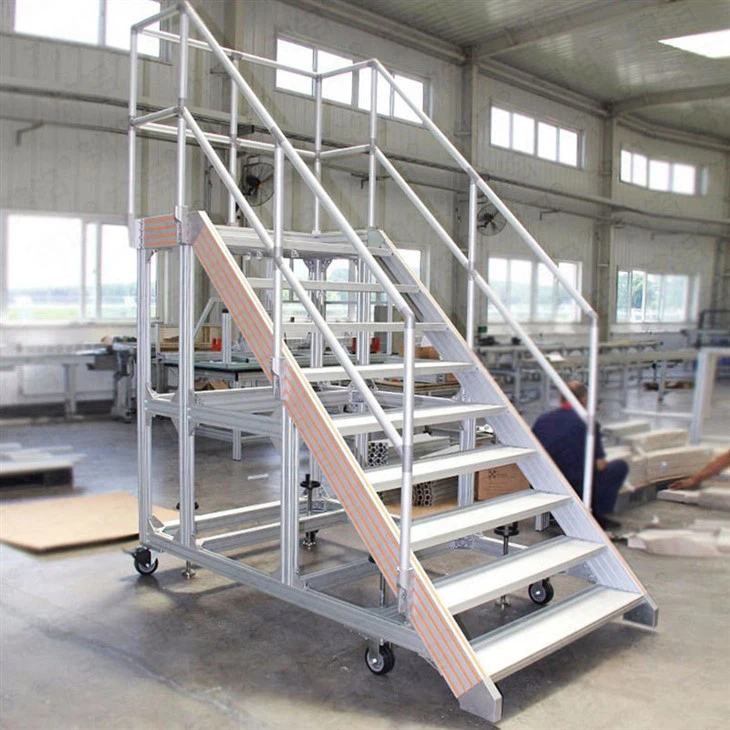
If you're looking for a more flexible and convenient solution for moving work platform stairs in a small room, consider Movable Aluminum Profile Stairs. These stairs are lightweight, easy to assemble and disassemble, and can be easily moved from one location to another. They are also corrosion-resistant and durable, making them ideal for use in a variety of environments.
Conclusion
Moving work platform stairs in a small room requires careful planning, the right equipment, and proper technique. By following the steps outlined in this blog, you can safely and efficiently move your stairs to their new location. If you have any questions or need further assistance, please don't hesitate to contact us. We're here to help you find the best solution for your needs.
References
- OSHA. (2019). Walking - working surfaces standard. Retrieved from [OSHA website]
- Grainger. (n.d.). Moving equipment guide. Retrieved from [Grainger website]


