

When it comes to construction and interior design, aluminum profile stairs have become a popular choice due to their numerous advantages, including durability, lightweight, and aesthetics. As a dedicated supplier of Aluminum Profile Stairs, we often receive inquiries about the standard size of these stairs. In this blog, we will delve into the various aspects of the standard size of aluminum profile stairs, shedding light on what you should consider when planning to install them.
General Considerations for Aluminum Profile Stairs Sizes
Before discussing specific dimensions, it's important to understand that the "standard" size can vary depending on several factors. These factors include the intended use of the stairs (residential or commercial), building codes and regulations in different regions, and the overall design concept of the space where the stairs will be installed.
Building codes play a crucial role in determining the size of stairs. In commercial buildings, for example, regulations are often more stringent to ensure the safety of a large number of people. Residential codes may offer more flexibility but still have minimum requirements for safety.
Step Dimensions
The step, or tread, of an aluminum profile stair is a critical component in terms of both safety and comfort. The standard width of a residential stair tread typically ranges from 250 mm to 300 mm (about 9.84 to 11.81 inches). This width provides enough space for a person to comfortably place their foot while ascending or descending the stairs.
In commercial settings, the tread width is usually wider, often starting from 300 mm and can go up to 400 mm (about 11.81 to 15.75 inches) or more. This wider width is necessary to accommodate the higher volume of traffic and to ensure the safety of individuals, especially those walking side - by - side or carrying objects.
The riser, which is the vertical part of the step, also has standard dimensions. The standard height of a riser in residential stairs is usually between 150 mm and 180 mm (about 5.91 to 7.09 inches). For commercial stairs, the riser height is often more strictly regulated, with a maximum height typically around 160 mm (about 6.3 inches) to make it easier for a wider range of people to use the stairs safely.
The relationship between the tread and the riser is also important. A common rule of thumb is that the sum of twice the riser height and the tread width should be between 600 mm and 650 mm (about 23.62 to 25.59 inches). This formula helps create a comfortable and safe stair - climbing experience.
Stair Width
The width of the entire aluminum profile stair is another important consideration. For residential uses, a stair width of 800 mm to 1000 mm (about 31.5 to 39.37 inches) is common. This width allows one person to move up and down the stairs comfortably and also provides some space for carrying small items.
In commercial buildings, the required stair width can be significantly greater. Depending on the occupancy load of the building, commercial stairs may need to be 1200 mm (about 47.24 inches) or wider to ensure the safe evacuation of people in case of an emergency. Wider stairs also accommodate the flow of traffic during normal use, such as in office buildings, shopping malls, or public institutions.
Landing Dimensions
Landings are flat areas on a stairway that provide a resting place and improve safety. The length of a landing should be at least equal to the width of the stair. For example, if the stair is 900 mm wide, the landing should be at least 900 mm long.
The width of a landing also needs to meet certain standards. In most cases, the landing width should match the width of the stair it serves. In commercial buildings, landings may need to be wider to accommodate people with disabilities or those using mobility aids.
As a Supplier, Our Offerings
As a supplier of Aluminum Profile Stairs, we understand the importance of providing products that meet diverse needs. We offer a wide range of pre - fabricated aluminum profile stairs in standard sizes, which can be quickly installed and are suitable for various applications.
Our Aluminium Movable Platform Ladder is an excellent example of our product line. This type of ladder is not only convenient for moving around but also designed with safety and comfort in mind. It adheres to industry - standard sizes for steps, widths, and landings to ensure a reliable and user - friendly experience.

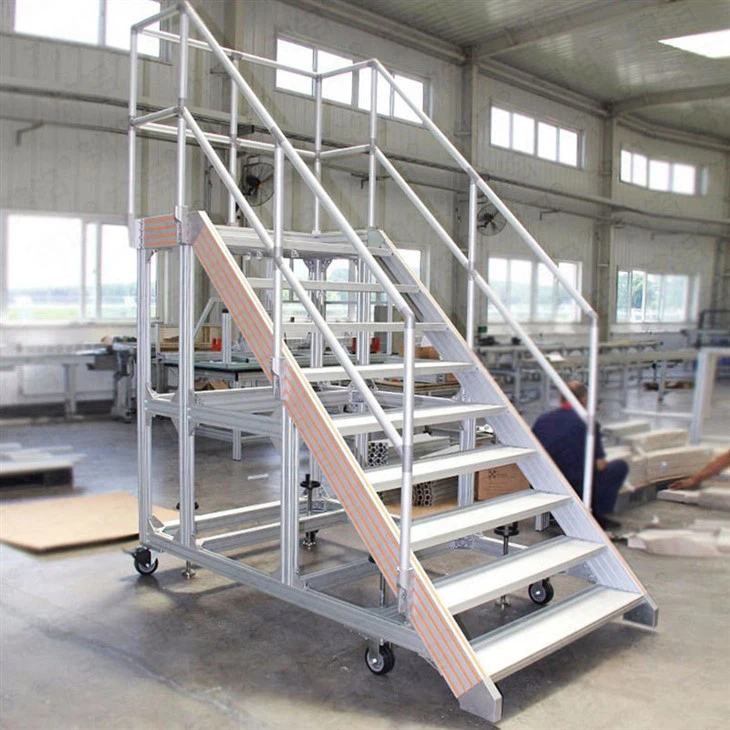
In addition to standard sizes, we also offer customization services. We know that some projects may have unique requirements that cannot be met by off - the - shelf products. Our team of experienced engineers and designers can work with you to develop custom - sized aluminum profile stairs that fit your specific design and functional needs. Whether it's a unique architectural concept or a special space constraint, we can find a solution.
Why Choose Our Aluminum Profile Stairs
When you choose our products, you are not only getting high - quality aluminum profile stairs but also a commitment to excellence. Our stairs are made from high - grade aluminum, which ensures durability and resistance to corrosion. This means that your stairs will look great and perform well for many years, even in harsh environments.
We also provide comprehensive after - sales service. Our team is available to answer any questions you may have about installation, maintenance, or repair. We understand that a successful project requires more than just a good product; it also needs reliable support throughout the process.
Contact Us for Your Aluminum Profile Stairs Needs
If you are considering installing aluminum profile stairs for your project, we invite you to contact us for more information. Whether you need standard - sized stairs or have a custom design in mind, our team is ready to assist you. We can provide detailed specifications, pricing, and delivery options to help you make an informed decision.
We believe that our products and services can meet your requirements and exceed your expectations. Don't hesitate to reach out to us for procurement and to start a conversation about how we can make your stairs project a success.
References
- "Building Code Requirements for Residential Stairways," National Association of Home Builders.
- "Commercial Building Stair Design Standards," International Code Council.
- "Aluminum in Construction: Best Practices for Stair Design," Aluminum Association.


