

Is an aluminum profile platform corrosion-resistant?
As a supplier of Aluminum Profile Platforms, I often get asked about the corrosion resistance of our products. This is a crucial question, especially for customers who plan to use these platforms in various environments, from industrial settings to outdoor applications. In this blog, I'll delve into the science behind the corrosion resistance of aluminum profile platforms, discuss the factors that can affect it, and share some real - world examples.
The Science of Aluminum's Corrosion Resistance
Aluminum has a natural ability to resist corrosion, and this is due to a thin oxide layer that forms on its surface when it comes into contact with oxygen in the air. This layer, known as aluminum oxide (Al₂O₃), is extremely thin, usually only a few nanometers thick, but it acts as a protective barrier. It prevents further oxidation of the underlying aluminum, effectively shielding it from the elements.
The formation of this oxide layer is a self - healing process. If the surface of the aluminum is scratched or damaged, the exposed aluminum immediately reacts with oxygen in the air to reform the oxide layer. This self - healing property gives aluminum profile platforms an inherent advantage over many other materials when it comes to corrosion resistance.
Factors Affecting Corrosion Resistance
While aluminum profile platforms are generally corrosion - resistant, several factors can influence their performance in different environments:
1. Environmental Conditions
- Moisture: High humidity or direct contact with water can accelerate the corrosion process. In coastal areas, where the air contains salt particles, the presence of moisture can lead to the formation of a more corrosive environment. The salt can break down the protective oxide layer, allowing water and oxygen to reach the underlying aluminum.
- Chemical Exposure: Exposure to certain chemicals, such as acids, alkalis, and salts, can also affect the corrosion resistance of aluminum. For example, in industrial settings where there are chemical fumes or spills, the aluminum profile platform may be at risk of corrosion. However, our Aluminum Profile Platforms are designed to withstand a certain level of chemical exposure, and we can provide specialized coatings for more demanding environments.
2. Alloy Composition
The type of aluminum alloy used in the profile platform can significantly impact its corrosion resistance. Different alloys have different chemical compositions, which can affect how they react with the environment. For example, alloys that contain elements like magnesium and silicon can have improved corrosion resistance compared to pure aluminum. At our company, we carefully select the alloys for our platforms to ensure optimal performance in various conditions.

3. Surface Treatment
Applying a surface treatment to the aluminum profile platform can enhance its corrosion resistance. There are several common surface treatments available:
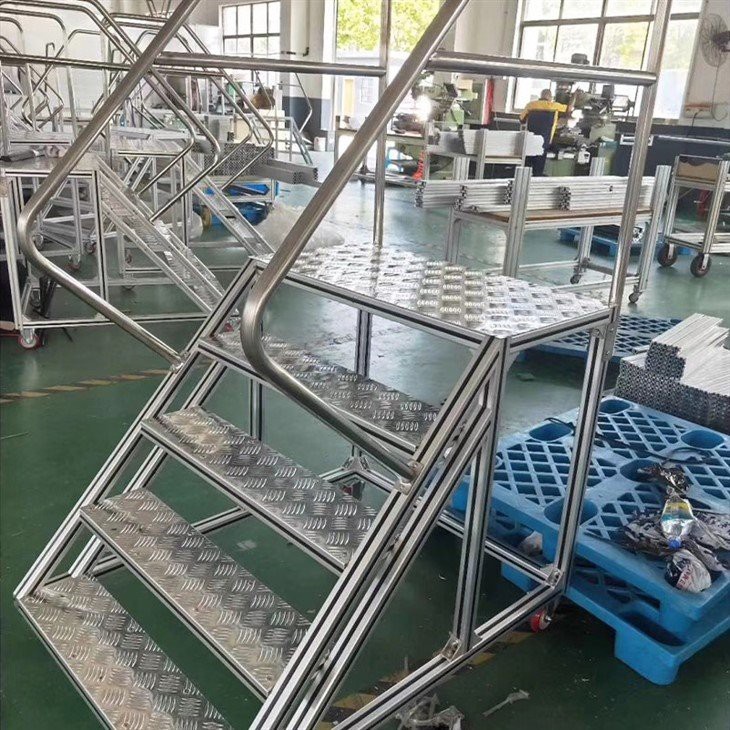
- Anodizing: This process involves creating a thicker and more durable oxide layer on the surface of the aluminum. Anodized aluminum is more resistant to corrosion, abrasion, and wear. It also provides a better base for painting or other coatings.
- Powder Coating: Powder coating is a popular surface treatment that involves applying a dry powder to the aluminum surface and then curing it under heat. The powder forms a protective layer that can resist corrosion, UV rays, and chemicals.
Real - World Examples
Let's take a look at some real - world applications of our aluminum profile platforms and how they have performed in terms of corrosion resistance:
1. Outdoor Storage Facilities
We supplied a set of Aluminum Profile Platforms to an outdoor storage facility. The platforms were exposed to the elements, including rain, sunlight, and varying temperatures. After several years of use, the platforms showed minimal signs of corrosion. The anodized surface treatment we applied during manufacturing played a crucial role in protecting the aluminum from the outdoor environment.
2. Industrial Manufacturing Plants
In an industrial manufacturing plant, our Aluminum Profile Platforms were used in an area where there was occasional exposure to chemical spills. Thanks to the specialized powder coating we provided, the platforms remained corrosion - free even after being in contact with these chemicals. The coating acted as a barrier, preventing the chemicals from reaching the aluminum surface.
3. Immovable Aluminum Profile Stairs
Our Immovable Aluminum Profile Stairs are often installed in public areas and industrial settings. These stairs are designed to be durable and corrosion - resistant. For example, in a coastal park, the immovable aluminum stairs have withstood the harsh coastal environment, including high humidity and salt spray. The combination of a high - quality alloy and a protective surface treatment has ensured their long - term performance.

Conclusion
In conclusion, aluminum profile platforms are generally corrosion - resistant due to the natural oxide layer that forms on the aluminum surface. However, the actual corrosion resistance can be influenced by environmental conditions, alloy composition, and surface treatment. As a supplier, we take these factors into account when designing and manufacturing our products. We use high - quality alloys and offer various surface treatments to ensure that our Aluminum Profile Platforms and Immovable Aluminum Profile Stairs can perform well in different environments.
If you're considering purchasing an aluminum profile platform for your project, whether it's for an industrial application, an outdoor installation, or a public area, we'd be happy to discuss your specific requirements. Our team of experts can help you choose the right alloy and surface treatment to ensure maximum corrosion resistance. Contact us to start a conversation about your procurement needs, and let's work together to find the perfect solution for your project.

References
- Aluminum Association. (2023). Properties and Applications of Aluminum Alloys.
- Davis, J. R. (2001). Aluminum and Aluminum Alloys. ASM International.
- Metals Handbook: Properties and Selection: Nonferrous Alloys and Pure Metals. (1990). ASM International.


